A glass bottle begins as a measured blend of silica sand, soda ash, limestone, and recycled glass. But what is the production process of glass bottles in a modern Chinese factory? In broad terms, raw materials are mixed, melted, shaped, annealed, and inspected. The details vary. Bottle color, weight, neck finish, and order volume all affect the production setup. A clear beverage bottle and an amber medicine bottle may need different batch recipes and furnace conditions.
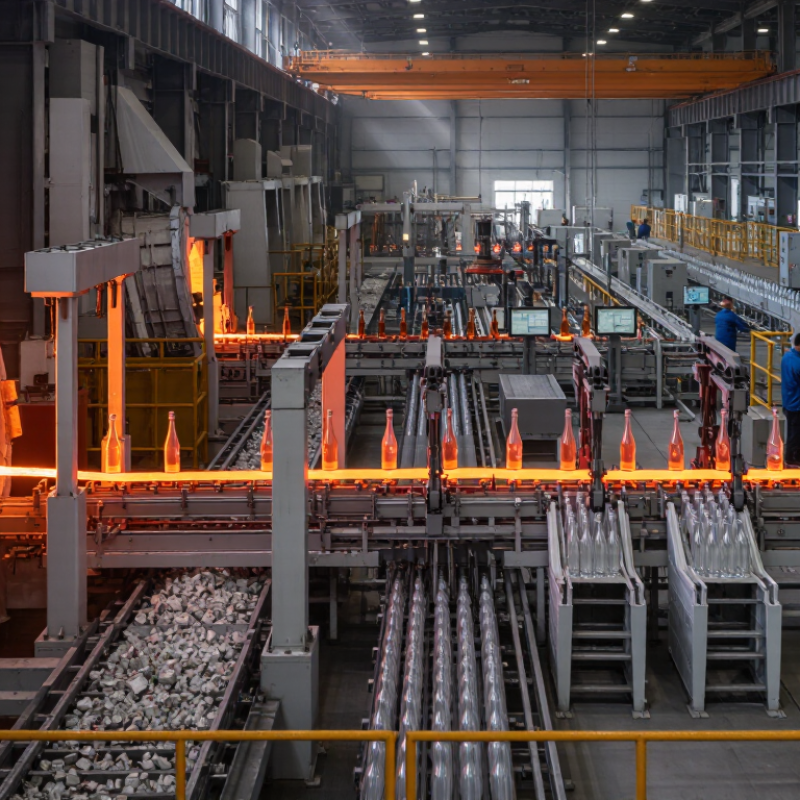
The Glass Packaging Institute describes glass melting temperatures of about 2,600°F (1,427°C), a useful indication of the heat required before forming can begin. At the forming machine, molten glass is cut into glowing gobs and shaped in molds, often through blow-and-blow or press-and-blow methods. Then the bottles pass through an annealing lehr, where controlled cooling reduces internal stress. Small changes matter. A rough seam or uneven wall can cause problems later. Inspection systems check dimensions and visible defects, while operators still monitor equipment and process trends.
Recycled glass, called cullet, can also return to the batch. FEVE’s industry reporting puts the European glass packaging recycling rate at 80.1% in 2021, showing the scale of collection and reuse in that market; it is not a figure for China. Chinese plants differ in technology, scale, and product mix, so one factory’s process is not a universal template. A process chart can look tidy. Real production is less tidy, and efficiency targets must be balanced against quality, energy use, and reliable delivery.
Chinese glass-bottle batches rely on silica sand, soda ash, and limestone. Silica forms the glass network; soda ash helps the batch melt at lower temperatures, while limestone improves chemical stability. The Glass Packaging Institute gives a common container-glass benchmark of roughly 70% sand, 20% soda ash, and 10% limestone. These proportions are a reference, not a fixed Chinese recipe. Batch design changes with bottle color, furnace conditions, and local mineral quality.
Manufacturers may also use feldspar to add alumina, which can improve durability, and recycled glass, or cullet, to replace part of the virgin batch. FEVE’s 2023 industry data put average cullet use in European container glass at about 52%; this is a useful comparison, not a China-specific figure. Cullet arrives as crushed, sorted fragments, and contamination must be controlled. A green bottle batch may tolerate different color inputs than a clear one. Batch recipes vary. There is a practical blind spot: public data rarely disclose each Chinese plant’s exact mineral mix, so broad percentages should not be mistaken for factory-level specifications.
Soda-lime glass bottles are made primarily from silica sand, with soda ash and limestone supplying key components. This chart shows a representative composition of the finished glass by oxide weight; actual formulations vary by bottle color and manufacturing requirements. Recycled glass (cullet) can also be added to the batch.
Glass quality starts before the furnace. Batch preparation combines silica sand, soda ash, limestone, and recycled glass, called cullet. Each ingredient is weighed and blended to keep the melt chemically consistent. Moisture, grain size, and uneven mixing can cause visible stones, streaks, or bubbles in finished bottles. Small errors matter.
The European Commission’s 2013 Best Available Techniques Reference Document for the Manufacture of Glass describes industrial glass melting as a high-temperature process, commonly around 1,500°C. In practice, furnace settings vary with glass composition, furnace design, and production rate. The prepared batch moves gradually through the furnace, where raw materials react and form molten glass. Operators monitor temperature and flow; a steady melt supports consistent bottle walls and color. It is not instant.
Cullet can lower the energy needed for melting because it is already glass. The Glass Packaging Institute reports that adding 10% recycled glass can reduce energy use by about 2–3% and carbon dioxide emissions by roughly 5%. These are industry estimates, not guarantees for every furnace. Contaminants and mixed colors can limit usable cullet, so preparation needs careful inspection. This step can be less tidy than process diagrams suggest.
Bottle forming starts when a measured gob of molten glass enters a mold. Blow-and-blow is commonly suited to narrow-neck containers, while press-and-blow offers better control for wide-mouth designs. Narrow-neck press-and-blow can also produce lightweight bottles with more even wall distribution. The right method depends on the bottle’s shape, weight, and production speed.
Mold design affects both appearance and performance. Engineers check the split line, neck-ring fit, vent placement, and cooling balance. Poor venting can leave surface marks; uneven cooling may create inconsistent walls. Mold trials should test real production conditions, not just a clean drawing. FEVE reported an 80.1% glass packaging collection rate in Europe for 2022. Consistent bottle design supports reliable sorting, though forming quality alone cannot guarantee recyclability. No mold is perfect. Small adjustments can matter.
Tips: Confirm neck finish and capacity before tooling. Inspect sample bottles for seams, base stability, and wall thickness. Record each adjustment; teams sometimes miss useful details when trial notes are rushed.
Source: FEVE, European glass packaging recycling data for 2022.
Once forming ends, each hot bottle enters an annealing lehr. Its temperature falls gradually, reducing internal stress that could later cause cracks. The cooling curve depends on glass composition, wall thickness, and bottle shape. A thick base and thin shoulder do not cool alike. Small flaws matter. Excessive stress may remain invisible until filling, transport, or a sudden temperature change.
Inspection follows annealing. Cameras check dimensions, bottle finish, and visible defects; polarized-light equipment can reveal stress patterns. Operators also review calibration and sample results, because automated systems can miss unusual defects. The U.S. EPA’s Advancing Sustainable Materials Management: 2018 Fact Sheet reported that roughly 25% of glass containers were recycled. Recycled cullet can vary in color and cleanliness, making consistent melting and inspection especially important. No line is perfect. When defect patterns repeat, teams should trace them back to forming and cooling settings, not merely reject more bottles. Good quality control depends on that feedback loop.
Once a glass bottle leaves the forming line, surface finishing helps protect its appearance and handling quality. A controlled cold-end coating can reduce scuffing as bottles move along conveyors. For a matte or frosted look, the finish should remain even around the shoulders, seams, and heel. Small variations show clearly under angled light. Check coating coverage, rub resistance, and compatibility with the intended filling process.
Decoration adds another layer of control. Screen printing, labeling, or frosting may require clean, dry glass and suitable curing conditions. Inspect color, alignment, and adhesion on samples from each production run. Looks good? That is not enough. A label can lift after condensation, while printed details may scratch in transit. Sampling is useful, but it can miss occasional defects; review inspection plans when line speed or design changes.
Packaging starts with dry, inspected bottles placed in trays or cartons with suitable dividers. A stable pallet pattern, corner boards, and secure wrapping help limit movement during handling. Too much tension can damage cartons, so wrapping needs adjustment rather than guesswork. For long routes, consider transfer points, vibration, and storage conditions. A wrapped pallet is not automatically safe. Even with careful controls, minor scuffs can appear, making transport trials and feedback from receiving teams worth recording.
Silica sand, soda ash, limestone, and recycled glass are weighed and blended. Small errors matter.
Moisture, grain size, or uneven mixing can cause stones, streaks, or bubbles. Some defects begin as tiny flaws.
Industrial melting commonly reaches about 1,500°C. Actual settings depend on glass composition, furnace design, and production rate.
Cullet may reduce melting energy because it is already glass. Mixed colors or contaminants can limit its use, so the benefit varies.
Blow-and-blow commonly suits narrow necks. Press-and-blow offers control for wide mouths, while narrow-neck press-and-blow can support more even walls.
Check the neck-ring fit, vents, split line, and cooling balance. Inspect real samples for seams, base stability, and wall thickness.
The annealing lehr cools bottles gradually and reduces internal stress. Thick bases and thin shoulders cool differently.
Cameras check dimensions, finishes, and visible flaws. Polarized-light equipment can reveal stress patterns, but automated checks may miss unusual defects.
Trace patterns to forming and cooling settings instead of only rejecting bottles. Trial notes can be rushed, and that deserves attention.
This overview explains what is the production process of glass bottles, from selecting raw materials to preparing the batch for melting. Common ingredients are carefully measured and blended to create a consistent mixture, which is heated until it becomes molten glass. The glass is then shaped into bottles using forming methods and molds designed to produce the required size, shape, and finish.
After forming, bottles are gradually cooled through annealing to reduce internal stress. They are inspected for defects and checked for consistency before moving on to surface finishing and protective packaging. The final stages prepare the bottles for storage and distribution. Together, these steps show how careful control of materials, temperature, shaping, and inspection helps produce durable, uniform glass bottles.

Swapora Bottle