How to Prevent Glass Bottles from Breaking in Transit 2026

Time:2026-10-29 Author:Isabella
0%

Glass bottle breakage is rarely caused by one dramatic impact. More often, a bottle shifts inside a carton, taps its neighbor, then meets a hard corner during handling. These small failures can damage products, delay deliveries, and erode customer confidence. Preventing them starts with understanding the full shipping route—not simply adding more padding.

Industry test procedures offer a practical starting point. The International Safe Transit Association’s ISTA 3A procedure evaluates packaged products weighing up to 70 kilograms in common parcel-delivery conditions, including drops and vibration. It is a test protocol, not a published estimate of glass breakage rates. ASTM International’s D5276 standard likewise describes free-fall drop testing for loaded containers. Together, these references help teams assess whether a bottle, divider, and outer box can withstand realistic handling. Results still depend on the actual package and distribution route.

This guide explains how to avoid breakage in glass bottle transport through better cushioning, snug dividers, suitable carton strength, and route-specific testing. Picture a bottle rattling inside a box with a loose partition: the defect is visible, but easy to overlook when packaging is rushed. Not every shipment needs the same design. A small trial may reveal more than an elegant guess. There is a trade-off, too: extra material can reduce movement, yet add weight and cost. The aim is reliable protection, measured with care and revised when real shipment evidence says otherwise.
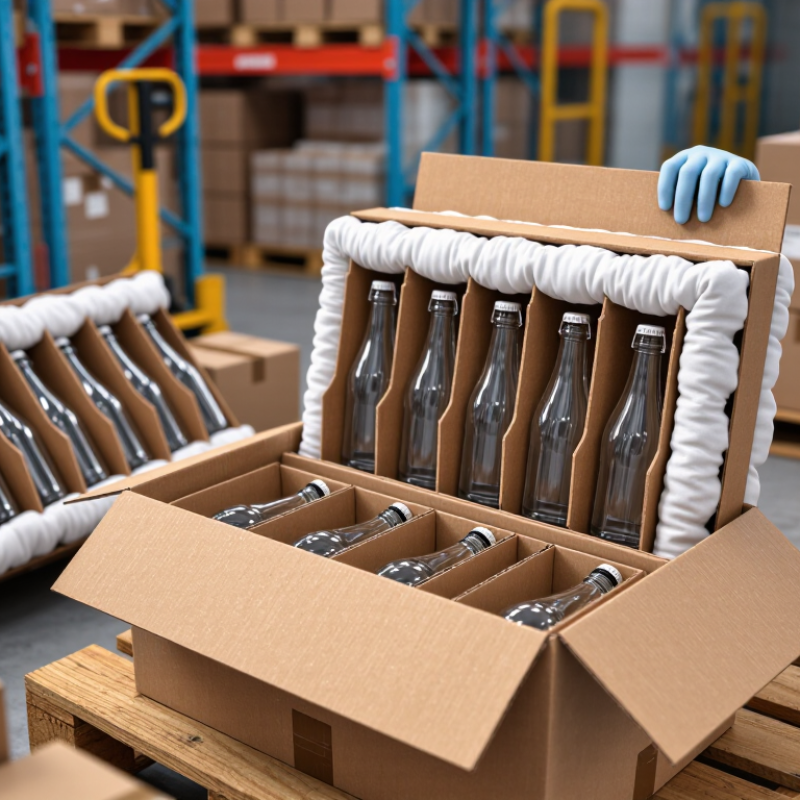
How to Prevent Glass Bottles from Breaking in Transit 2026

Understanding the Main Causes of Glass Bottle Breakage in Transit

Glass bottles often break because several small forces combine during transit. A carton may survive a brief drop, yet repeated vibration can make bottles knock against one another for hours. Even a narrow gap matters. Contact between the shoulder, base, or neck can create chips that later grow into cracks. Damage may appear far from the original impact.

Packaging pressure is another common cause. If dividers are too loose, bottles shift; if they press unevenly, stress concentrates at thin glass sections. Heavy cartons stacked above can crush weak corners or distort inner supports. A damp box may lose strength, too. These details are easy to overlook when a package looks tidy on the outside. That is not always obvious.

Temperature changes can also contribute, especially when cold bottles meet warm conditions quickly. Glass expands and contracts unevenly, and existing scratches make failure more likely. Rough handling at transfer points adds risk, where parcels are dropped, tilted, or placed on hard edges. In practice, a broken bottle does not always point to one clear mistake. Sometimes the cause is a small chip, hidden beneath a label, combined with vibration and a loose divider. Small gaps matter.

Choosing Bottles and Shipping Cartons for Better Protection

A bottle’s shape matters as much as its capacity. Measure its height, widest point, shoulder, and base, then compare those dimensions with the carton’s internal space. A bottle that fits snugly can still break if its neck or base takes a hard impact. Choose sturdy glass with consistent walls, and check samples for chips, uneven seams, or wobbling bases. Small flaws matter.

Select a shipping carton with enough strength for the packed weight and expected handling. A double-wall carton may help with heavier shipments, but the bottle still needs individual support. Use fitted dividers or molded inserts to keep glass from touching glass. Add cushioning around the neck and base, where impacts can concentrate. Leave room for protective material, not empty movement. Test a packed sample with realistic handling; one successful drop does not guarantee every route is safe. I’ve found that packing can look secure on a workbench, then shift after repeated vibration.

Tips: Measure the filled bottle, not just the empty one. Shake the sealed carton gently; if bottles move or clink, adjust the inserts before shipping.

Cushioning and Separating Bottles Inside the Package

Glass bottles usually break when they collide with one another or shift against the carton during handling. The goal is to keep every bottle still while absorbing bumps from outside. Wrap each bottle separately with cushioning that covers the base, sides, and neck. Pay extra attention to the shoulder and bottom edges, where impacts can concentrate. Use dividers or fitted cells to create a barrier between bottles. No glass should touch.

Place the wrapped bottles upright in a sturdy box, unless the packaging design specifies another orientation. Fill gaps with cushioning so the bottles cannot slide when the box is gently tilted. Avoid packing material so tight that it presses hard against the glass. A snug fit matters, but pressure can create its own risk. Close the carton, then carefully tilt and listen for movement. If you hear rattling, reopen it and add or reposition cushioning. This check is simple, though it cannot predict every drop or rough handling event. Test the finished package with the actual bottle shape and shipment configuration; a setup that works for short bottles may not protect taller ones.

How to Prevent Glass Bottles from Breaking in Transit (2026)

Illustrative breakage rates from a hypothetical 100-bottle handling trial. Results vary with bottle shape, packaging materials, and transit conditions.

Cushion each bottle and use dividers to prevent bottle-to-bottle contact. Validate your packaging with testing that reflects your actual shipping conditions.

Securing Packages Against Movement and Impact

Glass bottles usually break when they move inside a carton and strike a hard surface. The package should hold each bottle firmly without squeezing it. Wrap the bottle in cushioning, then place it in a snug cell or divider. Leave space between the glass and the carton walls for shock-absorbing material. No rattle. Gently shake the closed box; if you hear or feel movement, add cushioning or adjust the fit.

Use a sturdy, correctly sized carton rather than a much larger box filled loosely with padding. Keep bottles upright when the packaging design supports that position, and separate them so they cannot collide. Add cushioning beneath and above the bottles, where drops can create sudden impact. Crumpled paper may fill gaps, but it can compress during handling; molded inserts or firm dividers often hold their shape better. The right choice depends on bottle weight and the route.

Seal the carton securely, then test a packed sample with careful tilting and gentle handling. This is not a substitute for formal transit testing, but it can reveal loose contents before shipment. I have found that packing can look reassuring while still allowing a bottle to shift near a corner. Check those corners. Recheck after changing carton size, bottle shape, or cushioning, because a small change can alter how impact travels through the package.

How to Prevent Glass Bottles from Breaking in Transit 2026 - Securing Packages Against Movement and Impact
Risk or Packing Factor Recommended Protection Packing and Inspection Check
Bottles touching one another Use individual dividers, molded inserts, or partition cells that keep each bottle separate. Check that adjacent bottles cannot touch when the packed carton is gently moved.
Movement inside the carton Choose an insert sized to the bottle and carton. Fill remaining voids with suitable cushioning so the contents stay in position. Close the carton and gently tilt it in different directions. The bottles should not shift noticeably.
Impact to the bottle base Provide cushioning beneath the bottle base and use an insert that supports the bottle without concentrating pressure on a small area. Confirm that the bottle is held securely and that its base is not resting directly against the outer carton.
Impact to shoulders and necks Use a shaped insert or divider that supports the bottle body while protecting the shoulder and neck from contact with other bottles or the carton. Ensure the closure and neck are not bearing the weight of the package contents.
Carton compression during stacking Select a corrugated carton appropriate for the packed weight and expected stacking conditions. Avoid leaving unsupported gaps above the contents. Check that the closed carton does not bulge and that the top and bottom panels remain intact.
Weak or poorly sealed carton joints Use a sound carton and a consistent sealing method, such as suitable pressure-sensitive or water-activated carton-sealing tape. Inspect the bottom seam, top seam, and corners before dispatch. Replace damaged cartons.
Leakage after a closure loosens Secure closures according to the product and closure specifications. Add a compatible liner or sealed inner bag when appropriate. Check that each closure is properly fitted and that any secondary containment is closed before packing.
Excessive cushioning or an unsuitable insert Use cushioning that protects the bottle while keeping it centered. Confirm that the insert material is compatible with the product and packaging. Inspect for concentrated pressure, loose fit, and contact between glass and rigid carton surfaces.
Parcel handling and drop impacts Design the complete packed unit to withstand the distribution route. Where appropriate, evaluate the package using a recognized distribution test method, such as ASTM D5276 for free-fall drop testing. Test the finished package configuration—not an empty carton—and inspect bottles, closures, and carton after testing.
Vibration during road or air transport Prevent bottle-to-bottle contact and keep inserts from loosening under repeated movement. Consider a suitable vibration test for the intended shipping environment. After testing or a trial shipment, check for shifting, abrasion, broken glass, and closure loosening.
Multi-bottle shipments Use a partitioned carton or individual protective cells. Keep the load evenly distributed and separate bottles from heavy, hard items. Verify that every bottle has its own protected space and that the contents cannot settle into one side of the carton.
Unclear handling instructions Apply clear, appropriate handling labels when useful, but do not rely on labels as a substitute for protective packaging. Confirm that the package remains protected if labels are overlooked during routine handling.
Package design changes Recheck the packed configuration whenever the bottle, insert, carton, pack quantity, or shipping route changes. Record the package version and test results so the approved configuration can be reproduced consistently.
Final pre-shipment quality check Use a documented packing procedure covering bottle condition, insert placement, closure, carton sealing, and package labeling. Reject cracked or chipped bottles and any package with loose contents, damaged panels, or incomplete sealing.

Checking, Labeling, and Handling Shipments Safely

Before a glass shipment leaves the packing area, inspect each bottle under bright light. Look for chips around the rim, hairline cracks near the base, and loose closures. A bottle can appear sound at a glance, so rotate it rather than checking only one side. Remove damaged bottles from the shipment; padding cannot repair a flaw. Record the carton count and note any visible damage before sealing the boxes. Small cracks matter.

Labels should be clear, easy to see, and consistent with the way the cartons are packed. Mark fragile contents and show the intended upright position, but do not rely on labels alone. They cannot prevent rough handling. Add a shipment reference and destination details where they will not be covered by tape or straps. Keep paperwork dry and attach it securely.

During handling, keep cartons level and avoid sudden drops, sharp turns, or stacking beyond the packaging’s tested limit. Use dividers that keep bottles from touching, with cushioning around the base and neck. Before dispatch, gently check for movement inside a sample carton. If bottles shift or clink, reopen it and adjust the packing. I still find this check easy to skip when orders are rushed, but it often reveals a problem the label cannot.

FAQS

What commonly causes glass bottles to break during transit?

Repeated vibration, impacts, loose dividers, and heavy stacking can combine. A small hidden chip may grow into a crack.

Where should cushioning provide extra protection?

Cover each bottle’s base, sides, and neck. Protect the shoulder and bottom edges, where impacts can concentrate.

Should bottles touch inside the carton?

No. Wrap bottles separately and use fitted cells or dividers. No glass should touch.

How snug should the packing be?

Bottles should not slide, but cushioning must not squeeze the glass. Uneven pressure can stress thin sections.

How can I check for movement before shipping?

Close the carton and gently tilt it. If you hear rattling, reopen it and adjust the cushioning.

What kind of carton works best?

Use a sturdy, correctly sized carton. A much larger box can leave bottles shifting, even with loose padding.

Can temperature changes contribute to breakage?

Yes. Rapid changes can stress glass, especially if it already has scratches. Transfer points and rough handling add risk.

Is a gentle package check enough?

It can reveal movement, but it cannot predict every impact. Check the corners. Formal transit testing may still be needed.

When should I review the packing setup?

Recheck after changing the bottle shape, carton size, or cushioning. A setup that protects short bottles may not protect taller ones.

Conclusion

Preventing glass bottles from breaking in transit starts with understanding the risks: sudden impacts, vibration, pressure, and bottles shifting against one another can all cause damage. Choose sturdy bottles and a well-fitted shipping carton with enough strength to withstand handling. The package should leave minimal empty space while still allowing room for protective cushioning.

Wrap or cushion each bottle separately and use dividers to keep glass surfaces from touching. Fill gaps with suitable padding, then secure the contents so they cannot move when the carton is tilted or shaken. To understand how to avoid breakage in glass bottle transport, check that closures are tight, inspect the packed carton for weak spots, and label it clearly as fragile. Careful packing, clear instructions, and gentle handling throughout shipment work together to reduce breakage and help bottles arrive intact.

Isabella

Isabella

Isabella is a dedicated marketing professional with a sharp focus on driving brand growth and engagement through strategic content creation. With an extensive background in digital marketing, she combines her passion for storytelling with her keen understanding of industry trends to deliver......