Explore our highly transparent, top-grade glass solutions featuring bespoke designs, geometric precision, and custom branding integrations.
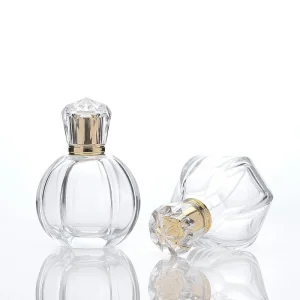
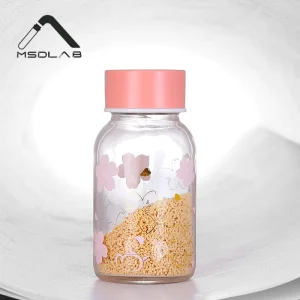
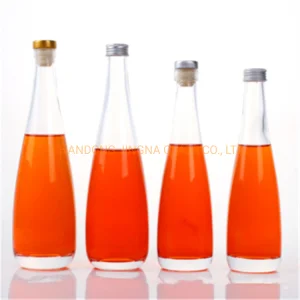
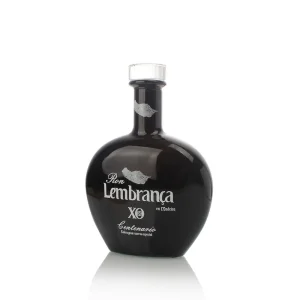
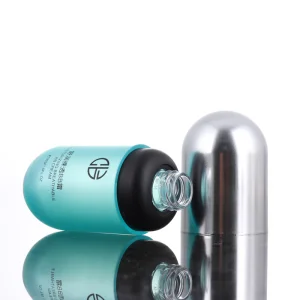
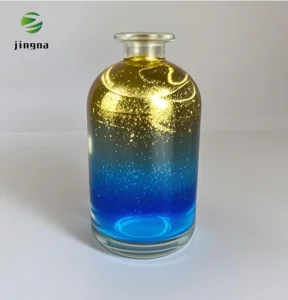
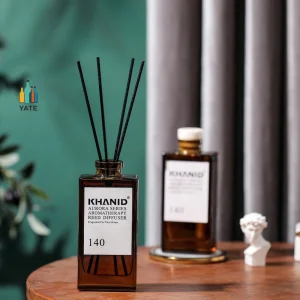
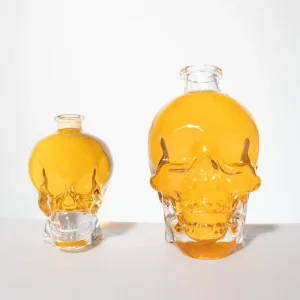
In the premium packaging ecosystem, Extra Flint Glass (often referred to as Super Flint) represents the absolute pinnacle of soda-lime glass manufacturing. Unlike standard glass compositions, Extra Flint is calculated with an extremely low iron oxide (Fe2O3) content, generally under 120 parts per million (ppm) or 0.012%. It is this strict threshold that prevents the common greenish-blue refraction typically observed in cheaper glass substrates.
To achieve the refractive index of >1.52 (comparable to fine crystal without lead hazards), raw batches utilize premium silica sands sourced from high-purity quartz mines, alongside carefully balanced additions of barium, zinc, and selenium. These trace decolorizing elements chemically neutralize the natural absorption spectrum of glass, yielding a light transmission level exceeding 92%.
For brands in spirits, luxury cosmetics, and pharmaceutical-grade applications, utilizing Extra Flint jars and bottles ensures that the product’s color remains undistorted. Light passes through the container cleanly, casting complex refractions along the heavy-base contours, thereby enhancing perceived brand value and establishing immediate authority on the retail shelf.
Combining heritage craftsmanship with advanced 6S automation and ecological sustainability.

Dongguan Swapora Bottle Co., Ltd. established in 2022, originated from a dream of bringing high-quality Chinese glass products to the global market. Starting as a small processing plant focused on the domestic market, we have gradually grown and expanded through our dedication to quality and pursuit of innovation.
Our production base is located in an industrial park in Guangdong Province, covering a total area of 10,000 square meters, with over 6,000 square meters of modern standard factory buildings. The factory integrates glass melting, deep processing, warehousing, and logistics, ensuring efficient and continuous production processes.
The factory area is scientifically planned, clean, and equipped with advanced environmental protection systems, reflecting our green manufacturing philosophy. Our production workshops strictly adhere to the 6S management system (Seiri, Seiton, Seiso, Seiketsu, Shitsuke, Shukan), providing a clean and orderly environment for the precision manufacturing of every piece of glass.
Our manufacturing workflow doesn't stop at raw forming. We offer a vertically integrated suite of finishing procedures in our dedicated cleanrooms. This includes automatic multi-color screen printing, acid frosting, vacuum metalization electroplating, precision labeling, and organic spray coatings.
By localizing all processing steps under our 6S protocol in Guangdong, we mitigate the risk of inter-facility transportation damages and chemical contamination, assuring a significantly lower defect rate (AQL 1.0/2.5) compared to traditional fragmented supply chains.
"Our integrated facility allows us to process high-temperature firing, ensuring the structural stability of the neck and absolute seal performance required for air-tight cork finishes."
Why international brands shift procurement pipelines to southern China's industrial nodes.
We utilize automatic oxy-fuel combustion furnaces and precise thermographic monitoring systems. This ensures a consistent melt history and prevents thermal shock crystallization in the final glassware structures.
Equipped with double-gob and triple-gob Individual Section (IS) forming machines, we achieve microscopic glass distribution accuracy, preventing off-center wall thickness issues.
Our facility in Dongguan is positioned within Guangdong's high-density transport network. Offering direct access to major international shipping routes via Shenzhen, Hong Kong, and Nansha ports.
A data-centric view on selecting an extra flint glass supplier that matches enterprise-level requirements.
When international supply chain managers and packaging designers evaluate potential Chinese manufacturing partners, they must balance optical performance against unit economics and transportation stability. Standard flint solutions often present visual distortion, and inconsistent heavy-bottom distributions lead to breakage rates of up to 4% during conveyor-filling processes. Here is how our premium extra flint formulations compare across critical metrics:
| Evaluation Parameter | Standard Flint Glass | High Flint Glass | Extra Flint Glass (Swapora Grade) |
|---|---|---|---|
| Fe₂O₃ Iron Impurities | > 0.05% | 0.02% - 0.04% | < 0.012% |
| Color Characteristics | Slight green/blue edge tint | Neutral with warm refraction | Ultra-clear, crystal-white profile |
| Density (g/cm³) | 2.44 - 2.48 | 2.48 - 2.50 | 2.51 - 2.55 (High tactile weight) |
| Optical Transmittance | 84% - 88% | 89% - 91% | > 92.5% |
| Hydrolytic Resistance | ISO 719 - Class HGB3 | ISO 719 - Class HGB3 | ISO 719 - Class HGB1/HGB2 |
| Typical End Application | Mass beer & condiment jars | Standard spirits & cosmetics | Bespoke whiskey, high-end perfume, diffusers |
Designing packaging workflows aligned with target consumer demographics and shelf placement strategies.
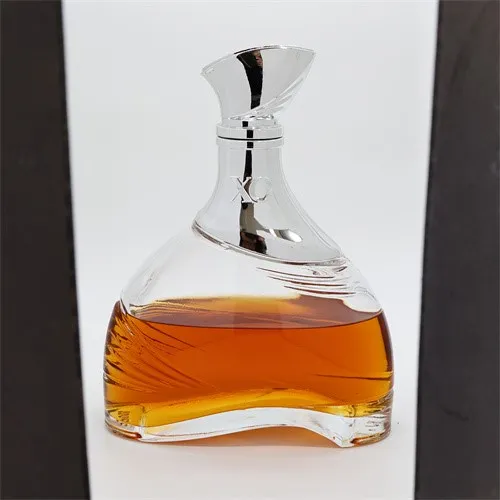
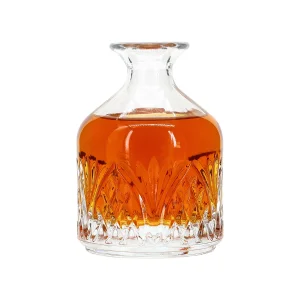
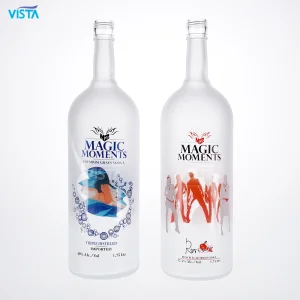
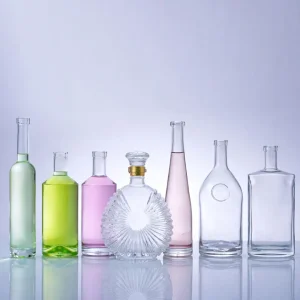
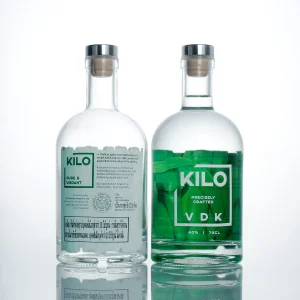
For high-value spirits, the packaging is the physical manifest of the brand's identity. Extra flint glass acts as a prism, showcasing the golden hues of aged whiskey or the pristine clarity of triple-distilled vodka. Our thick-bottom forming technology ensures that gravity is visually anchored at the base of the bottle.
We supply custom Oslo, round, and square silhouettes (such as our 500ml and 750ml cork-finish structures) designed to withstand high pressure during high-speed vacuum filling. The structural stability of the lip prevents chipping during cork installation, a critical pain point on bottling lines.
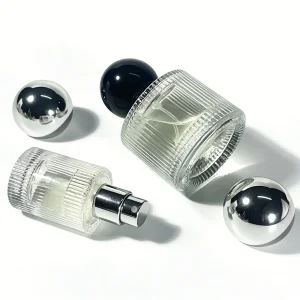
Cosmetic brands require absolute chemical resistance to prevent interactions between essential oils, alcohol bases, and glass oxides. Our premium formulas score exceptionally high in hydrolytic testing, ensuring no degradation of active ingredients over extended shelf-lives.
Whether molding complex organic shapes (like our pumpkin-profile perfume spray bottles) or standard cylindrical roll-on containers, our moulds maintain a tolerance of ±0.5mm. This guarantees that pump closures and crimp sprayers thread without leakage, preserving formula integrity from factory to cosmetic vanity.
A look at the CAD, FEA, and thermodynamic modeling procedures underpinning our product design lifecycle.
Every bespoke jar and bottle is modeled in high-resolution CAD software. We apply Finite Element Analysis (FEA) to simulate internal pressure resistance, thermal shocks, and vertical load capability, optimizing wall thickness profiles before creating physical tooling.
Molds are fabricated from premium heat-resistant cast iron alloys using automated 5-axis CNC machining stations. This keeps parting lines virtually invisible on the finished glass, creating a seamless crystal look.
As finished bottles exit the annealing lehr at around 550°C, they pass through opto-electronic inspection scanners. Bottles with hairline cracks, dimensional variances, or stone inclusions are automatically ejected to ensure uniform quality.
Addressing the technical, logistics, and quality assurance queries raised by global procurement departments.
Specialty containers for sprits, cosmetic lines, and commercial beverage configurations.

 Swapora Bottle