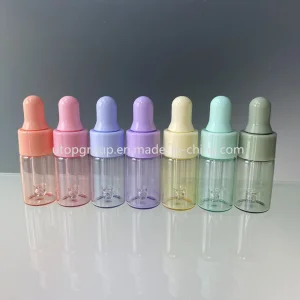
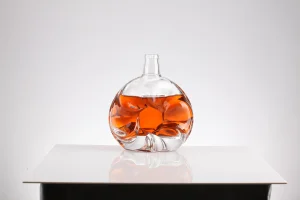
Explore our high-density, precision-molded short neck jars and specialty glass containers tailored for global enterprise exporters.
Analyzing structural shifts in global rigid packaging, material sustainability mandates, and the engineering advantages of short neck glass profiles.
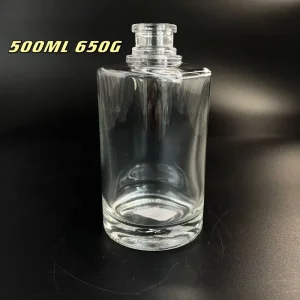
In the contemporary global packaging sector, the demand for **custom OEM short neck jars and containers** has experienced exponential growth. Driven by consumer preferences for premium tactile interactions, compact storage efficiency, and visually distinctive shelf presence, short neck glass designs have redefined industry standards across North America, Europe, and Asia-Pacific. The reduction of neck height allows for a lowered center of gravity, mitigating tip-over risks during high-speed automated filling lines and optimizing transit volume density by up to 18% compared to traditional long-neck profiles.
Global trade policies, including the European Union's Packaging and Packaging Waste Regulation (PPWR) and US FDA CFR 21 standards, have placed stringent requirements on carbon footprints and chemical inertness. Short neck glass jars inherently reduce raw material mass per volumetric unit while maintaining structural integrity. OEM glass manufacturing leverages continuous electric-boost furnace technology to minimize Scope 1 greenhouse gas emissions, establishing short neck glass packaging as the prime choice for eco-conscious enterprises.
A rigorous examination of glass chemistry, thermal shock resistance, neck finish engineering, and volumetric stability.
| Technical Parameter | Super Flint Glass Specification | Extra Flint Glass Specification | Standard Soda-Lime Glass |
|---|---|---|---|
| Refractive Index (nD) | 1.525 – 1.535 (Ultra Transparency) | 1.515 – 1.525 (High Clarity) | 1.500 – 1.510 (Standard Translucency) |
| Iron Content (Fe₂O₃) | < 0.02% (Crystal Clear) | < 0.04% (Minimal Tint) | < 0.08% (Slight Greenish Tint) |
| Thermal Shock Resistance (ΔT) | Up to 120°C (ASTM C148 Certified) | Up to 105°C | Up to 80°C |
| Internal Pressure Tolerance | ≥ 1.8 MPa (Heavy Base Fortified) | ≥ 1.5 MPa | ≥ 1.0 MPa |
| Annealing Point | 560°C – 580°C | 540°C – 560°C | 520°C – 540°C |
The neck finish of short neck jars dictates sealing efficiency, torque retention, and hermetic closure integrity. OEM manufacturing options include **GPI/GFI continuous thread finishes**, **deep-skirt lug finishes for vacuum twist-off applications**, and **custom cork/bar-top stopper bore geometries**. Using optical micro-calipers and digital projection systems, neck inner diameters (ID) and thread pitch are maintained within a zero-tolerance margin of ±0.15mm, guaranteeing zero oxygen ingress or liquid micro-leakage during international freight movement.
Short neck jar geometry undergoes rigorous **Finite Element Analysis (FEA)** to optimize wall-thickness distribution. By transferring structural mass toward the push-up (base) and shoulder transition zones, shock impact energy is evenly dissipated. This structural fortification renders our custom short neck jars resilient against vertical loading pressures exceeding 15,000 N during automated pallet capping and long-haul maritime stacking.
From 3D digital simulation to high-efficiency IS machine molding and automated cold-end quality control.
Clients submit initial conceptual sketches or functional specs. Engineering teams generate parametric CAD files within 48 hours, conducting volumetric displacement calculations and draft angle optimization. 3D acrylic models are resin-printed for ergonomic verification prior to mold tooling tooling commitment.
Tooling dies are CNC-machined using high-grade alloy cast iron or nickel-bronze materials to ensure exceptional thermal conductivity and surface mirror finishes. Custom cavity engraving allows for debossed branding logos, batch tracking codes, and anti-counterfeiting micro-textures directly onto the glass body.
Molten glass gobs at 1,150°C are fed into Individual Section (IS) double or triple-gob forming machines. **Press-and-Blow technology** is specifically utilized for wide-mouth short neck jars to achieve precise, uniform glass distribution, while **Blow-and-Blow** is applied for narrow neck spirit decanters with thick base configurations.
Formed jars pass through a controlled-temperature annealing lehr over 90–120 minutes, systematically relaxing internal thermal stresses. Upon exiting, a dual-stage cold-end coating (monobutyltin trichloride followed by polyethylene spray) is applied, enhancing scratch resistance and line handling durability.
Delivering tailored structural glass solutions across diverse industrial sectors with specific operational requirements.
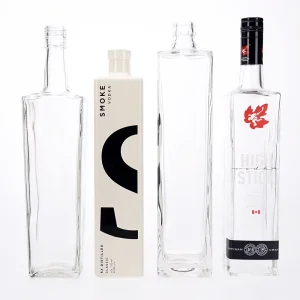
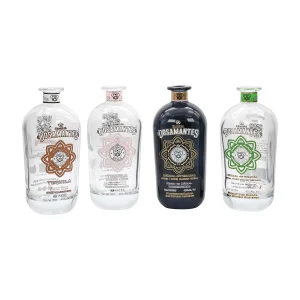
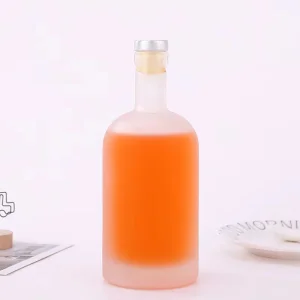
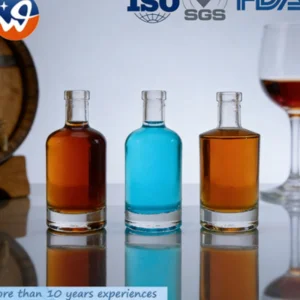
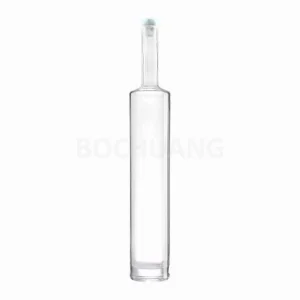
Short neck round and square glass bottles serve as the signature packaging format for ultra-premium Whiskey, Rum, Tequila, and Artisanal Gin. The reduced neck length enhances hand-feel during pouring while allowing heavy base ("heavy bottom") glass styling that communicates weight, luxury, and prestige on retail shelves.
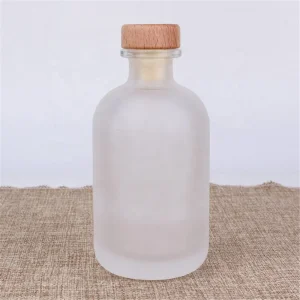
Wide-mouth short neck jars are fundamental to cosmetic formulation packaging—including face creams, body balms, and clay masks. Coated with opaque color spraying, inner frosting, or metallic hot-stamping, these UV-protective glass jars shield active cosmetic ingredients from photo-degradation while conveying clean beauty aesthetics.
For high-end organic preserves, saffron, caviar, and honey, short neck jars with lug twist-off caps allow effortless spoon accessibility and commercial autoclave hot-fill processing up to 121°C, maintaining vacuum seals and shelf-stability without preservatives.
Standardized amber and clear short neck jars comply with USP Type III chemical resistance standards. Ideal for solid-dose nutraceuticals, marine collagen powders, and active botanicals, these jars accommodate induction-seal tamper-evident caps and child-resistant closures (CRC).
Pioneering Next-Generation Manufacturing Solutions for Global Exporters (2025–2035 Horizon)
Integrating artificial intelligence into cold-end inspection lines. High-speed multi-camera arrays evaluate 100% of production output in real time, detecting micro-cracks, air bubbles (blisters), dimensional variances, and finish flaws down to 0.05mm at speeds exceeding 400 units per minute.
Narrow Neck Press and Blow (NNPB) technology enables up to 25% reduction in overall glass weight without sacrificing mechanical strength. Lowering tare weight directly cuts global transportation carbon footprint and shipping costs for international exporters.
Transitioning from traditional natural gas-fired furnaces to green-electricity hybrid and hydrogen-assisted melting technology. This strategic shift reduces direct Scope 1 carbon dioxide emissions by up to 60% across the manufacturing lifecycle.
Integrated Design, Precision Engineering, Green Manufacturing, and Global Logistics Infrastructure
Dongguan Swapora Bottle Co., Ltd. established in 2022, originated from a dream of bringing high-quality Chinese glass products to the global market. Starting as a small processing plant focused on the domestic market, we have gradually grown and expanded through our dedication to quality and pursuit of innovation.
Our operational framework combines agile OEM/ODM customization with enterprise-scale manufacturing capacities. We maintain strict quality assurance protocol alignments with European, American, and Asian food-grade contact standards, providing end-to-end support for global brand owners, distilleries, cosmetic houses, and packaging distributors.

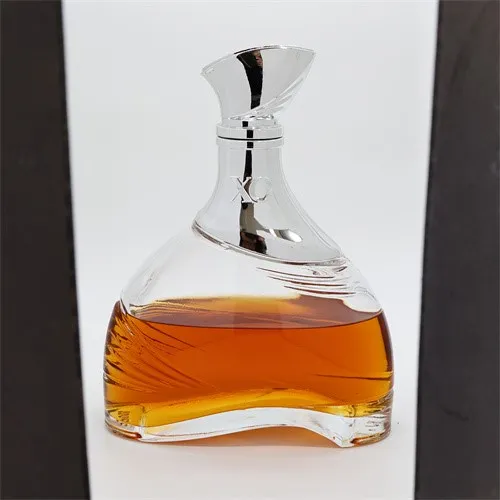
Our production base is located in an industrial park in Guangdong Province, covering a total area of 10,000 square meters, with over 6,000 square meters of modern standard factory buildings. The factory integrates glass melting, deep processing, warehousing, and logistics, ensuring efficient and continuous production processes.
The factory area is scientifically planned, clean, and equipped with advanced environmental protection systems, reflecting our green manufacturing philosophy. Our production workshops strictly adhere to the 6S management system, providing a clean and orderly environment for the precision manufacturing of every piece of glass.
Technical solutions and commercial answers regarding short neck jar OEM manufacturing, mold customization, and global shipping.
Short neck glass jars provide a significantly lower center of gravity, which enhances stability during high-speed automated washing, filling, and capping operations. Structurally, the shorter neck minimizes lever arms during tipping forces, reducing neck-breakage rates. Furthermore, the reduced height increases overall container volume per vertical height unit, leading to up to 18% higher palletization density, optimizing shipping container utilization and lowering freight costs per unit.
We offer comprehensive decorative and surface engineering techniques including: 3D embossed/debossed glass mold etching, full-spectrum color spraying (gloss, matte, or translucent gradient finishes), acid frosting, high-temperature ceramic decal printing, foil hot-stamping, UV screen printing, and custom neck seal finishes (cork stoppers, GPI continuous threads, or metallic lug caps).
Every batch undergoes rigorous quality testing adhering to ISO 9001 and 6S management standards. We utilize continuous automated optoelectronic vision equipment for dimensional verification, wall-thickness ultrasonic gauging, and thermal shock testing in accordance with ASTM C148 guidelines (evaluating temperature differentials up to 120°C). Internal stress is neutralized via precise 90+ minute annealing lehr cooling cycles.
For existing stock designs, MOQs start as low as 5,000–10,000 units. For fully customized OEM/ODM molds, standard production MOQs range from 20,000 to 50,000 units depending on jar weight and volume. Sampling and 3D tooling design require 10–15 business days, steel/iron mold production takes 20–25 days, and mass production cycles are typically completed within 30 days after sample sign-off.
Yes. All our glass containers are crafted from 100% chemically inert, lead-free Extra Flint or Super Flint soda-lime glass, fully complying with US FDA CFR 21, European Union EC 1935/2004, and LFGB directives. They exhibit zero chemical leaching, making them safe for spirits, acidic sauces, organic hot-fill foods, and active skincare formulations.
Review additional high-performance glass packaging solutions from our OEM manufacturing catalog.
 Swapora Bottle