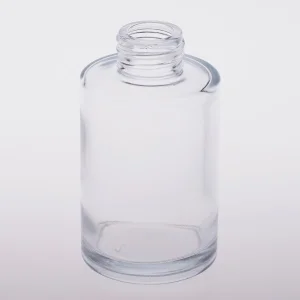
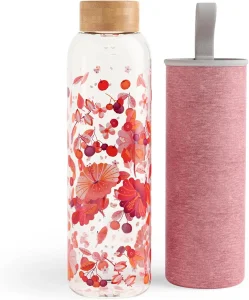
Explore our leading lightweight glass packaging range, engineered with Narrow Neck Press Blow (NNPB) technologies to optimize shipping weights and mechanical stability for West African transit corridors.

As the commercial heart of the West African Economic and Monetary Union (UEMOA), Togo—driven by the expansion of the Autonomous Port of Lomé (PAL)—is experiencing an industrial renaissance. Rapid urbanization, combined with rising middle-class consumer segments, has catalyzed the growth of domestic beverage production, pharmaceutical compounding, and natural cosmetic exports (particularly shea butter products). Historically, local manufacturing units relied heavily on conventional, heavy-weight glass bottles. However, the macro-economics of freight transportation across transit corridors such as the Lomé-Ouagadougou corridor, coupled with global greenhouse gas (GHG) reduction mandates, have generated an immediate and critical need for lightweight glass solutions.
In response to these regional demands, manufacturers in Togo are looking to substitute imports with highly resilient yet lightweight structures. Reducing the tare weight of glass containers directly targets the bottom line: decreasing ocean container shipping freight rates, reducing harbor clearance surcharges, and allowing for higher volumes of liquid cargo to be shipped within regional gross vehicle weight restrictions. Furthermore, regional environmental regulations are transitioning towards circular economy targets, rewarding enterprises that integrate low-carbon packaging formats.
The manufacturing paradigm shift from "Blow-and-Blow" (B&B) to "Narrow Neck Press Blow" (NNPB) processes defines our lightweighting capabilities. The fundamental limitation of traditional B&B processing is uneven wall thickness distribution, requiring designers to over-engineer container weight to ensure the thinnest segment meets minimum structural thresholds. By contrast, NNPB utilizes a metal plunger to mechanically form the internal parison cavity, guaranteeing extremely precise glass distribution. This allows wall thickness to be consistently maintained at a nominal value of 1.2mm to 1.8mm without compromising mechanical integrity.
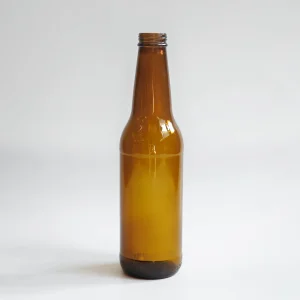
By engineering the glass composition and employing advanced cold-end and hot-end coatings (including titanium tetrachloride and organic protective layers), our lightweight glass bottles exhibit mechanical properties equivalent to or exceeding heavier traditional variants. In high-pressure applications such as carbonated soft drinks (CSDs) and lager beers, our 330ml bottles achieve internal pressure resistances exceeding 1.6 MPa (16 Bar), proving fully capable of withstanding pasteurization cycles and turbulent logistics across regional African road networks.
| Parameter / Specification | Traditional Blow-and-Blow | Our Advanced NNPB Lightweighting | Industrial Advantage to Togo Importers |
|---|---|---|---|
| Average Wall Thickness | 3.0mm – 4.5mm | 1.2mm – 1.8mm | Consistent thermal dissipation, material savings |
| Weight (330ml Beer Bottle) | ~260g – 280g | ~180g – 195g | Up to 30% reduction in net tare weight per carton |
| Internal Pressure Resistance | > 12 Bar | > 16 Bar | Highly compatible with industrial carbonation and warm pasteurization |
| Thermal Shock Stability | ΔT = 38°C | ΔT ≥ 42°C | Minimized shattering risks under sub-tropical handling conditions |
Importing industrial components and packaging materials into Togo demands strategic logistical management. As a leading manufacturer exporting to West Africa, Dongguan Swapora Bottle Co., Ltd. coordinates sea freight routes originating from the industrial ports of Guangdong (Shenzhen/Guangzhou) directly to the Autonomous Port of Lomé. Given that maritime shipping costs are often calculated based on weight limits, optimizing container layouts and reducing unit weights allows our logistics team to increase the quantity of bottles packed per 40ft High Cube (HC) container by up to 22%, significantly lowering the per-unit landing cost.
Furthermore, to counteract the harsh humidity and high temperatures characteristic of sub-tropical maritime climates, our exporting protocols integrate marine-grade pallets, heavy-duty shrink wraps, and desiccants inside containers to prevent glass weathering (soda leaching) during long voyages. This ensures that every shipment of lightweight glass arriving at your Lomé production facility is ready for immediate line filling.
Discover our specialized medical, cosmetic, and carbonated-beverage line variations engineered for the unique import parameters of Togo’s primary production lines.

Our commitment to cutting-edge material sciences dictates our long-term engineering strategies.
Addressing the core technical, logistical, and commercial inquiries of beverage procurement managers and logistics coordinators in the West African region.
No, it does not. Through Narrow Neck Press Blow (NNPB) technology, the glass distribution is kept incredibly uniform, eliminating thin corner spots. Additionally, hot-end tin chemical vapor deposition (CVD) coatings followed by cold-end polyethylene emulsion coatings reduce friction and eliminate surface micro-cracks. This allows the bottles to handle high-speed conveying forces of over 60,000 bottles per hour without failure.
Togo inland freight rates are governed by strict axle load limit laws, especially when transporting cargo trans-border into Burkina Faso, Niger, or Mali. By reducing the container tare weight by 20% to 30%, you can maximize the actual net product payload per shipment, saving thousands of dollars in overall transportation and fuel surcharges.
Direct sea transit from Shenzhen or Guangzhou ports to Lomé, Togo typically ranges between 35 to 45 days. We provide comprehensive export documentation including the Certificate of Analysis, SGS inspection reports, Bill of Lading, and pre-arrival manifest details to ensure quick customs clearance at the Lomé port.
Yes. We offer deep processing customization, including high-temperature screen printing, multi-color decal applications, acid etching, and embossing. Custom embossing can be strategically placed to reinforce the structure of the lightweight bottle.
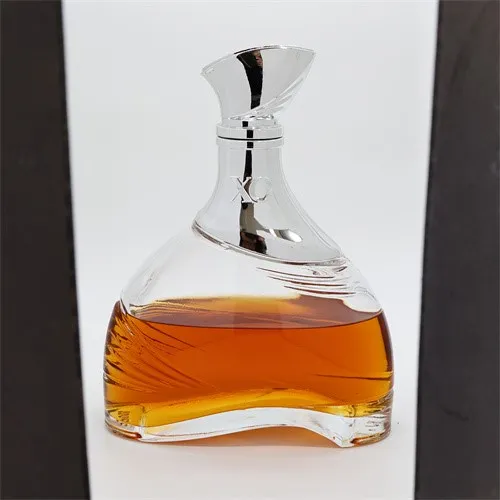
Our diverse line of lightweight glass products is engineered for pharmaceuticals, cosmetics, craft spirits, and carbonated beverages.

Your Trusted Global Glass Manufacturing Partner Serving Togo
Dongguan Swapora Bottle Co., Ltd. established in 2022, originated from a dream of bringing high-quality Chinese glass products to the global market. Starting as a small processing plant focused on the domestic market, we have gradually grown and expanded through our dedication to quality and pursuit of innovation.
Our production base is located in an industrial park in Guangdong Province, covering a total area of 10,000 square meters, with over 6,000 square meters of modern standard factory buildings. The factory integrates glass melting, deep processing, warehousing, and logistics, ensuring efficient and continuous production processes. The factory area is scientifically planned, clean, and equipped with advanced environmental protection systems, reflecting our green manufacturing philosophy. Our production workshops strictly adhere to the 6S management system, providing a clean and orderly environment for the precision manufacturing of every piece of glass.

Partner with Dongguan Swapora to lower your supply chain expenses, enhance structural durability, and minimize your logistics carbon footprint in Togo and West Africa.
Send Inquiry Now Swapora Bottle